CHAPTER 01 / 05 · Ray Casting
First Hit
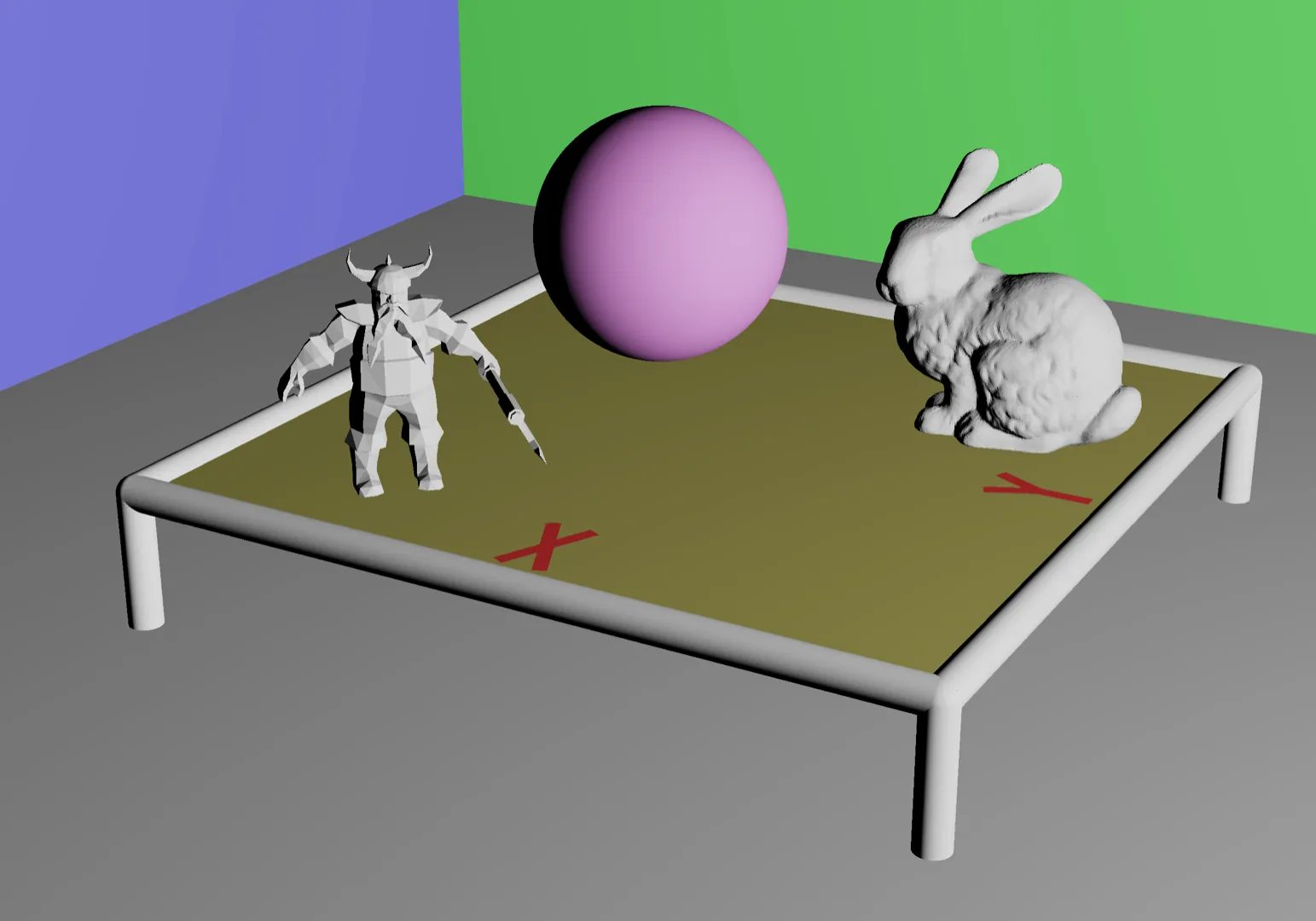
A CPU ray caster: sphere, box, cylinder, triangle, and the BVH that drops a single frame from 89 seconds to 130 milliseconds.
Ray–primitive intersectionBVHMöller–Trumbore
2026 · FEB · 04Read the chapter →
A CPU path tracer, from a single ray to San Miguel at ten million triangles.
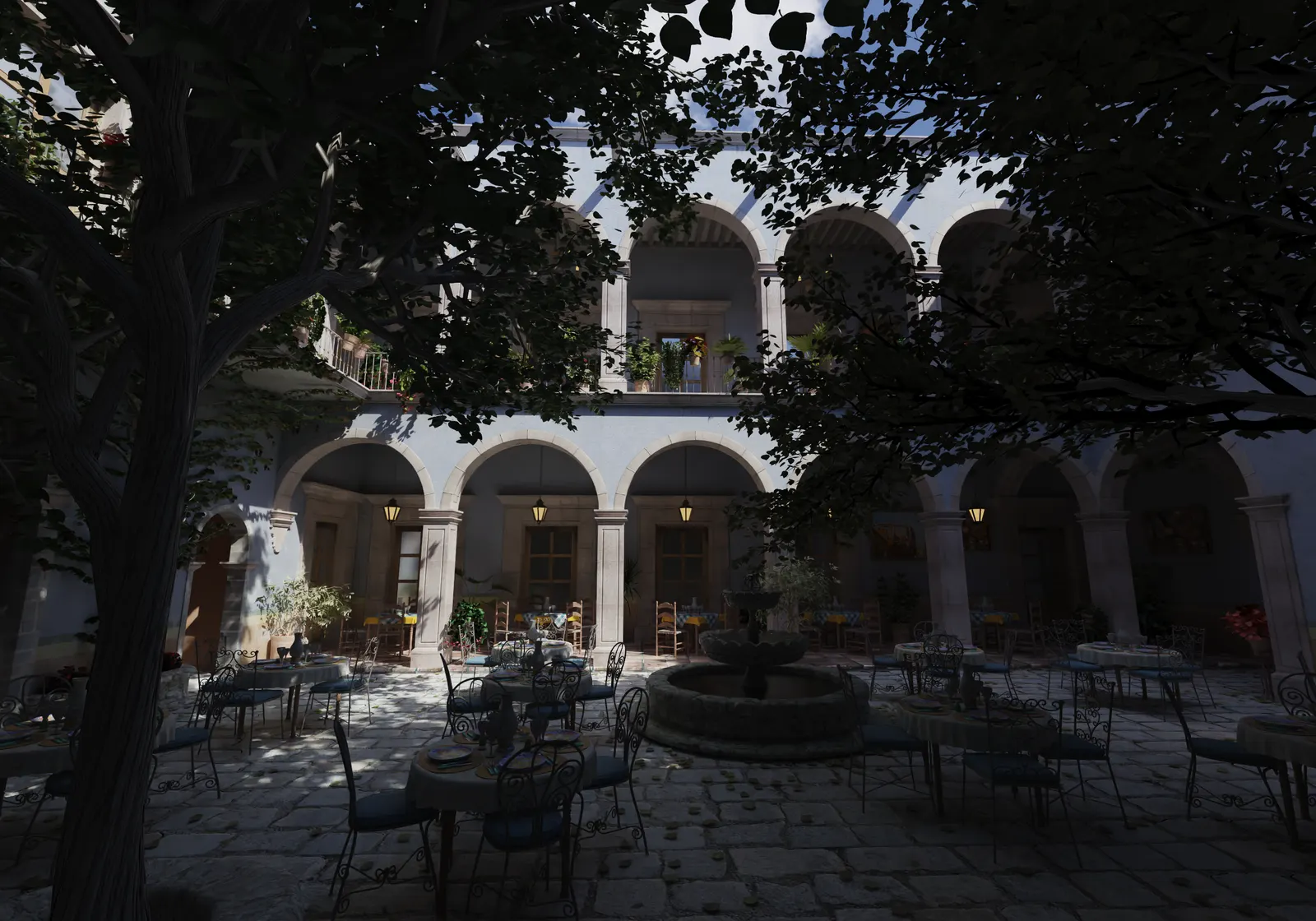
The first chapter answers one question: what does this ray hit? Five chapters later the same code renders the San Miguel courtyard at ten million triangles, lit by an HDR sky and a hundred small lamps. Each chapter removes an assumption the one before it relied on: that scenes are small, that light arrives directly, that surfaces are perfectly smooth, that nothing transmits.
The rendering equation is the same in chapter five as in chapter one. What changes is the bookkeeping around it: acceleration, sampling, materials, transmission, scale. Chapter one's ray caster would still be running on San Miguel; each addition is what made the next scene tractable.
A CPU ray caster: sphere, box, cylinder, triangle, and the BVH that drops a single frame from 89 seconds to 130 milliseconds.
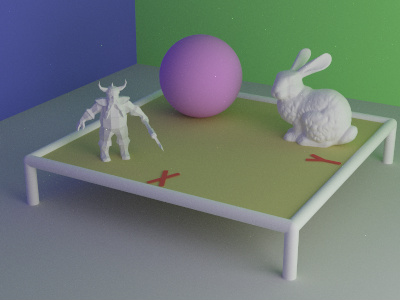
Monte Carlo path tracing: cosine-weighted BRDF sampling, Russian roulette, and the shadow rays that reach a clean image in a tenth the passes.
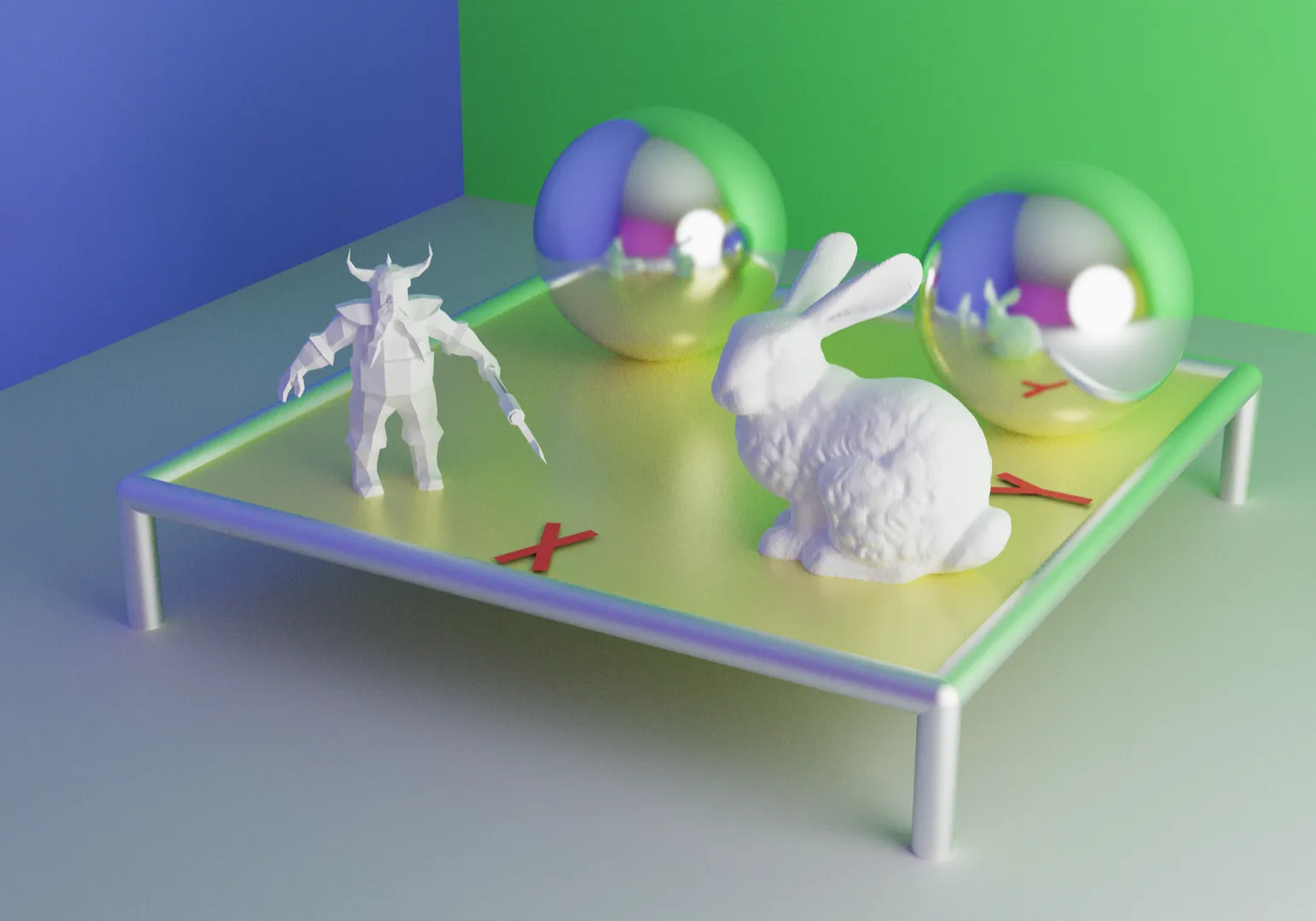
The Cook–Torrance microfacet BRDF (Phong NDF, Smith masking, Schlick Fresnel), and the multiple importance sampling that kills the fireflies it introduces.
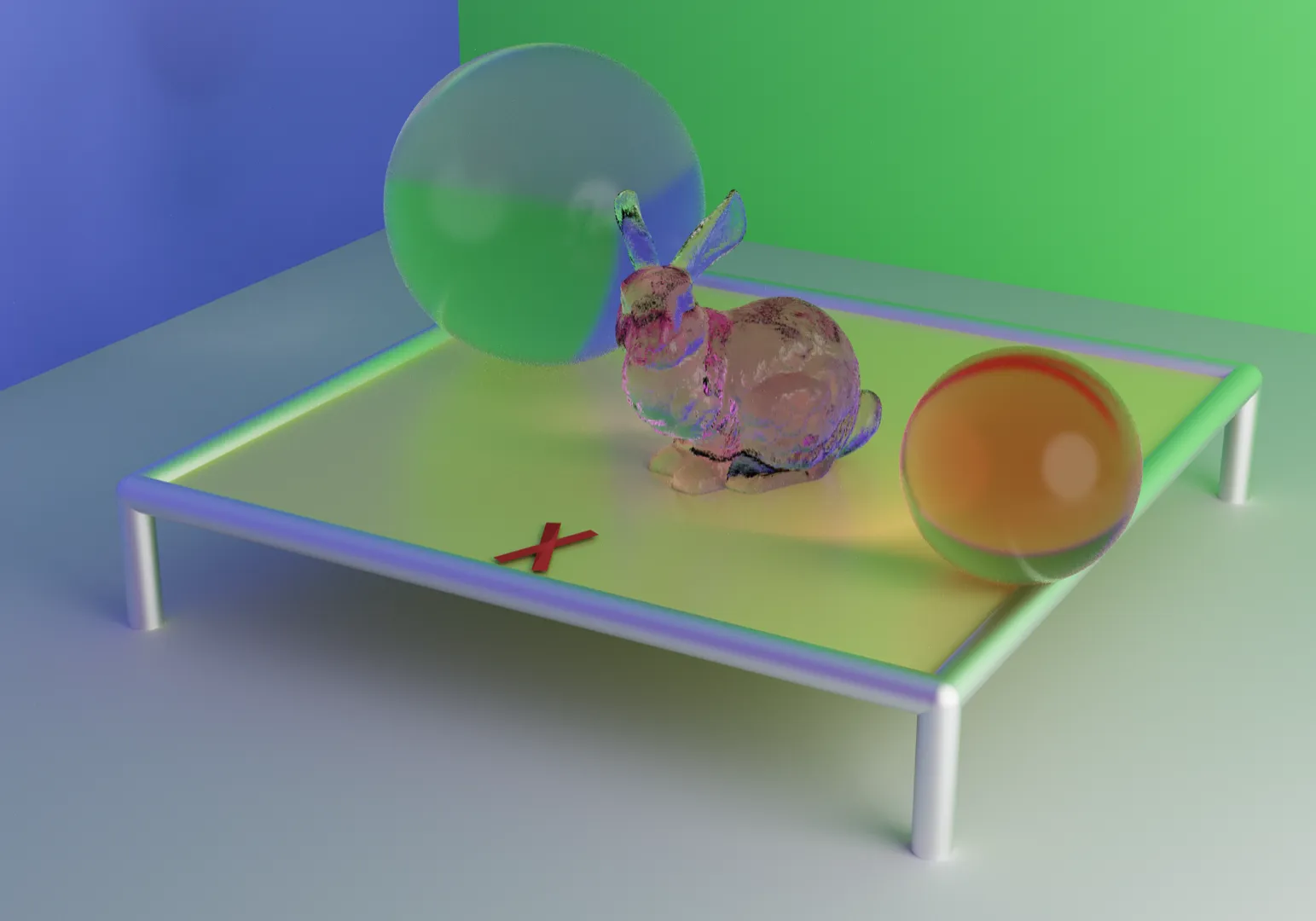
A transmission lobe added to the BRDF: Snell refraction at every microfacet, total internal reflection, Beer's-law tint, and the power-heuristic MIS that quiets the sharper lobe.
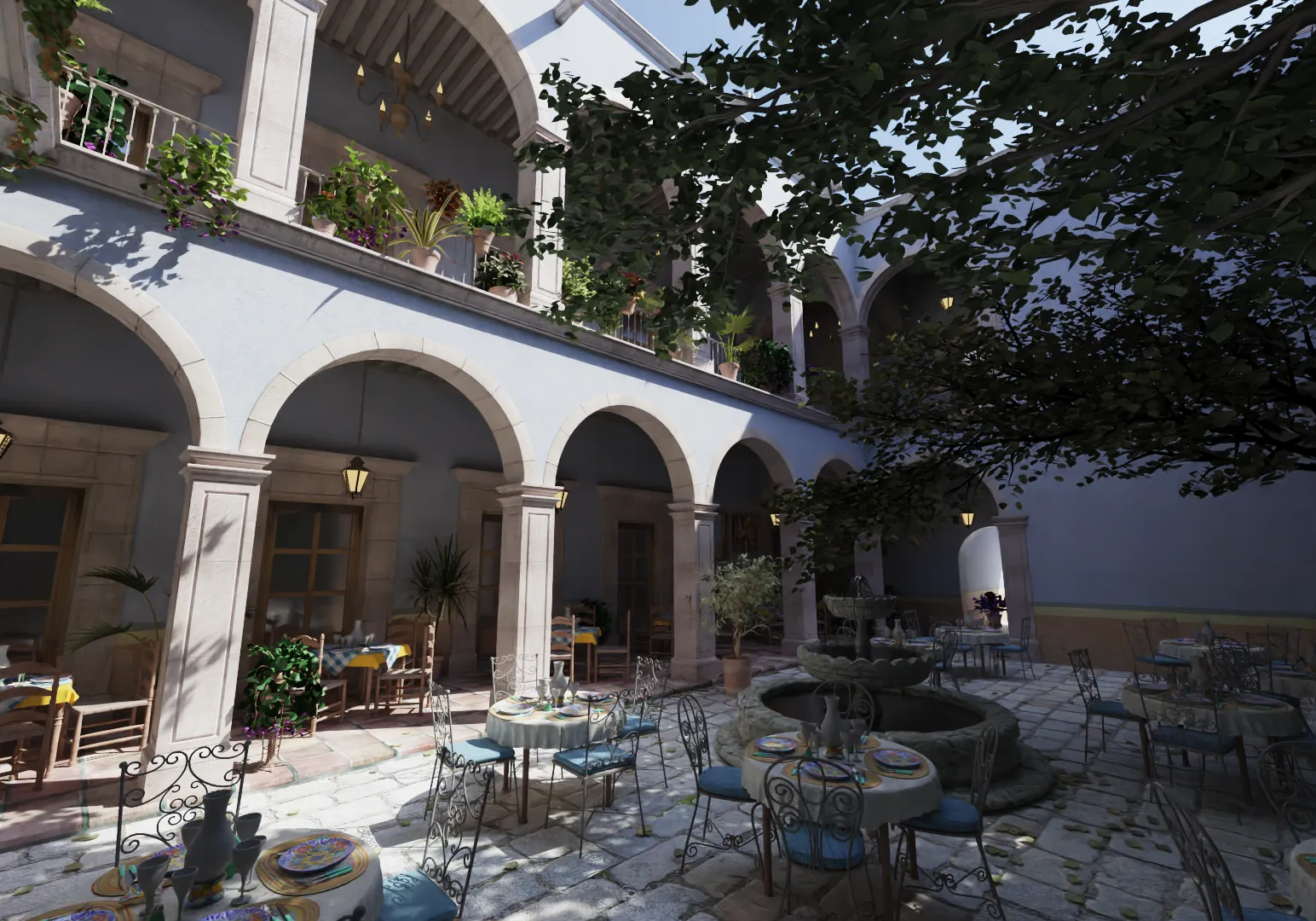
Scaling to San Miguel and the Bistro: importance-sampled HDR environment lighting, an area light aggregated from every emissive triangle, a binary scene cache, and offline denoising.